In the treatment of oily sludge, OBM drilling cuttings, contaminated soil, and industrial organic waste, traditional incineration often causes large flue gas emissions, high energy consumption, resource waste, and secondary pollution. Some conventional thermal desorption units also suffer from uneven heating, unstable temperature control, and incomplete treatment.
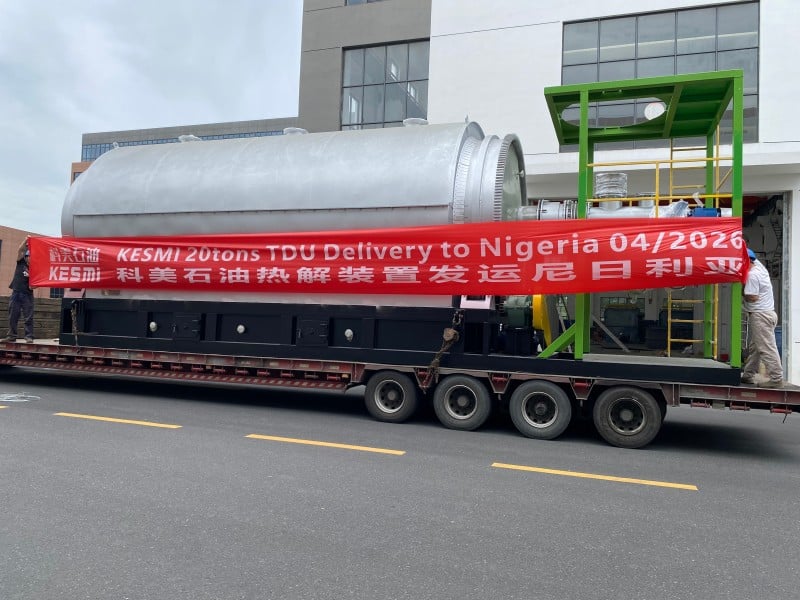
To solve these problems, KESMI developed the 20TPD Thermal Desorption Unit. The system uses mature thermal oil indirect heating technology and focuses on stable operation, precise temperature control, energy efficiency, and resource recovery.
High-Temperature Pyrolysis and Gas-Phase Separation Technology
Oil sludge contains complex components, including harmful substances such as naphthenes, benzene series compounds, and polycyclic aromatic hydrocarbons. These pollutants are difficult to treat under strict environmental regulations. Traditional treatment methods often fail to achieve complete separation and efficient resource recovery.
The KESMI TDU system is designed based on high-temperature pyrolysis and gas-phase separation technology. Inside a sealed chamber with accurate temperature control, organic compounds are rapidly vaporized for efficient oil, gas, and solid separation.
Thermal Oil Indirect Heating for Stable Temperature Control
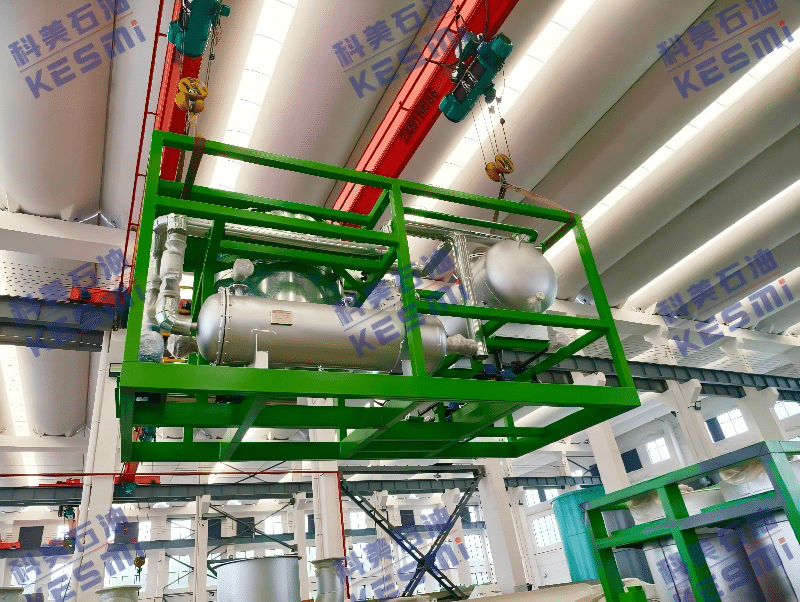
This system uses a closed-loop thermal oil circulation system. The material is heated indirectly during the thermal desorption process. Compared with direct flame heating and hot air heating, thermal oil heating provides more uniform temperature distribution, better thermal stability, and lower heat loss. The unit can maintain a stable operating temperature of 420–500°C. The maximum treatment temperature can reach around 500°C. Since the material does not contact open flame directly, local overheating, coking, and carbonization can be avoided effectively.This design improves organic contaminant desorption efficiency and reduces overall energy consumption.
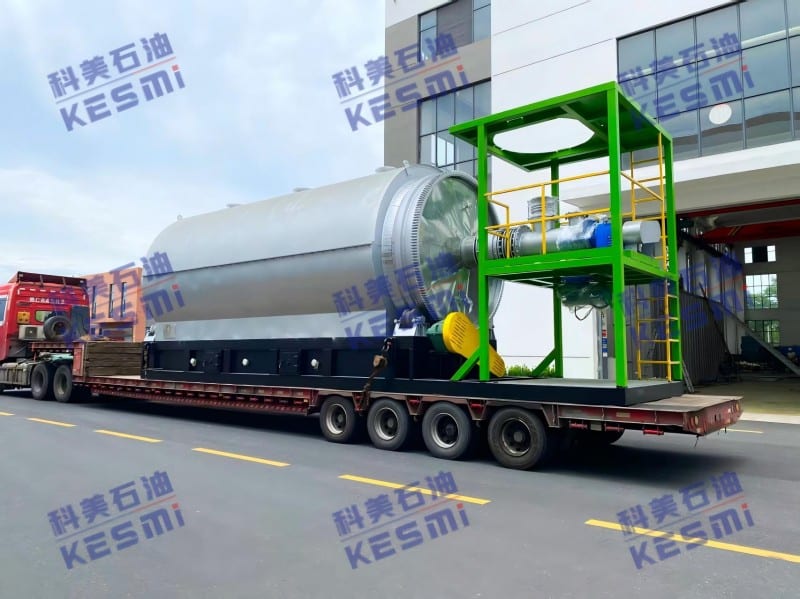
Working Process
1. Preheating and Dewatering
Waste materials first enter the preheating and dewatering system. Before entering the thermal desorption furnace, the material is preheated and partially dewatered. This process reduces moisture content, lowers energy consumption during thermal desorption, and improves overall treatment efficiency. After preheating, the material feeding becomes more stable, which supports continuous operation.
2. Thermal Desorption Treatment
The pretreated material enters the thermal desorption unit-furnace. The unit uses a thermal oil circulation system for indirect heating. Oil, moisture, and organic contaminants are evaporated and separated from the solid phase during heating.
3. Condensation and Oil-Water Separation
The cleaned hot vapor enters the quenching and condensation system. The vapor is rapidly cooled and converted into liquid mixture. The liquid then enters the oil-water separation system for oil, water, and solid separation. Recovered oil can be reused or further processed. Treated water can be recycled for cooling and moisturizing inside the system.
4. Non-Condensable Gas Treatment and Reuse
A small amount of non-condensable gas enters the gas treatment unit. After oil removal, dehydration, and filtration, the gas is sent to the burner chamber for complete combustion. The generated heat can support the thermal oil heating system and reduce total energy consumption.
5. Solid Discharge and Final Disposal
After thermal desorption, the treated solid material is discharged automatically. The treated solids can be discharged compliantly, landfilled, or reused depending on project requirements.
Resource Recovery and Lower Operating Cost
The system includes a complete resource recovery process. It helps reduce waste discharge effectively.
- Treated water can be reused for cooling and moisturizing the treated solids.
- Recovered oil can be reused as fuel oil or chemical feedstock.
Compared with traditional incineration, this system produces less exhaust gas and lower greenhouse gas emissions.
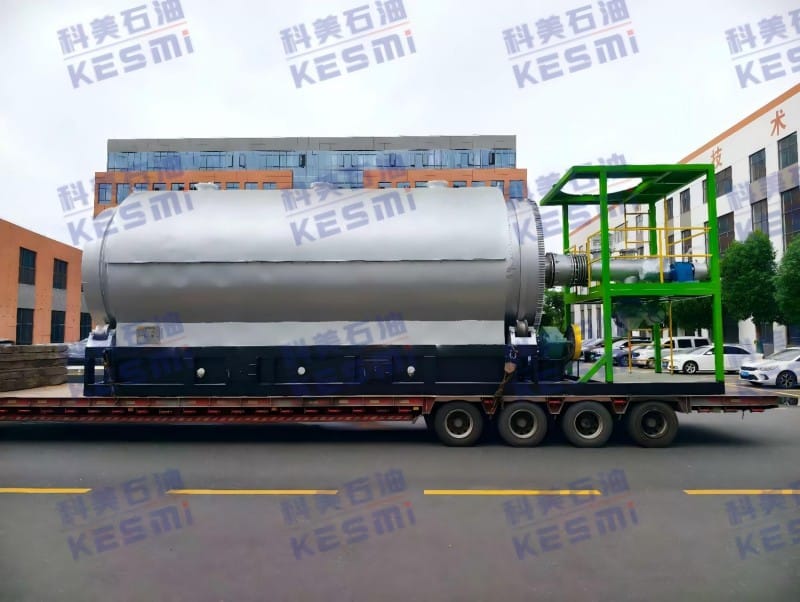
The unit is designed for continuous industrial operation, can be widely used for:
- Oily sludge treatment
- OBM drilling cuttings treatment
- Contaminated soil remediation
- Pharmaceutical and chemical waste treatment
Compared with overly complex systems, industrial users focus more on stability, continuous operation, and treatment performance.
The KESMI Thermal Desorption Unit focuses on stable heating, uniform temperature control, low energy consumption, and resource recovery. It provides a reliable solution for industrial waste reduction and recycling.