KES Separation Provides Oilfield Equipment Training in West Africa
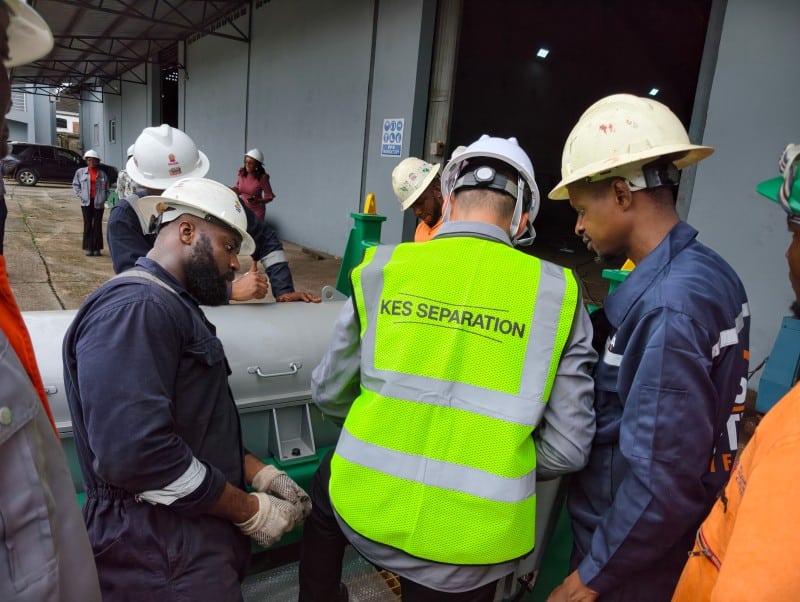
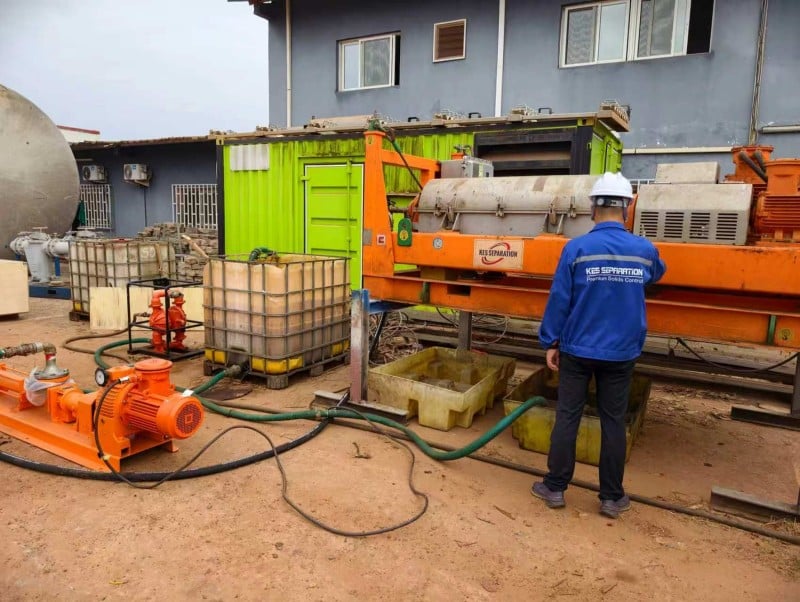
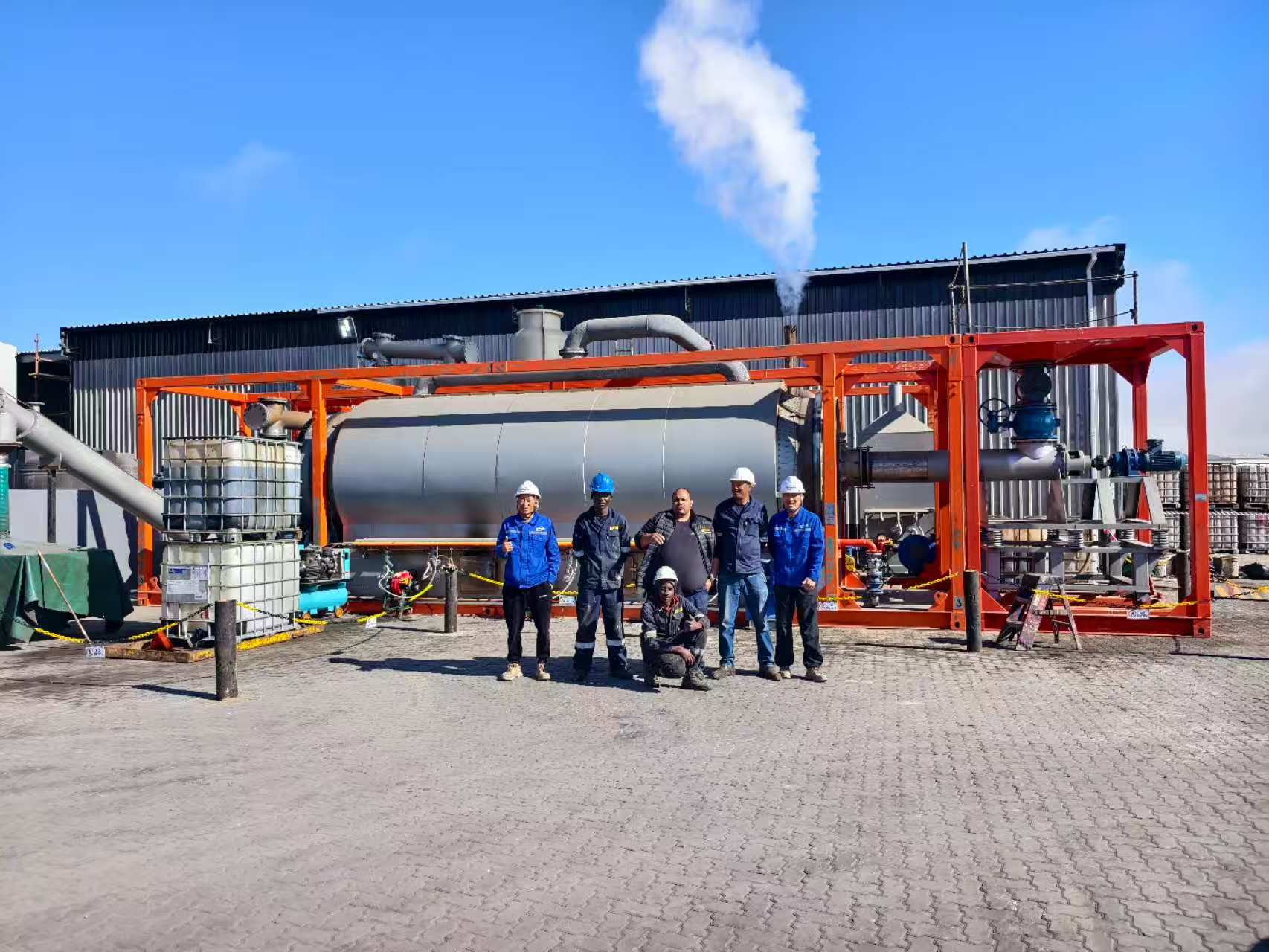
KES Separation recently delivered professional oilfield equipment training in West Africa, providing on-site technical services and practical training for local oilfield operations. The training focused on equipment operation, daily maintenance, troubleshooting, parameter adjustment, and technical support for decanter centrifuges and progressive cavity pumps.
The on-site training was designed around the practical challenges faced by local project teams. Instead of relying only on theoretical instruction, the KES Separation technical team combined technical explanations with hands-on equipment operation. This approach helps operators understand equipment working principles and develop the skills required for safe, stable, and efficient operation.
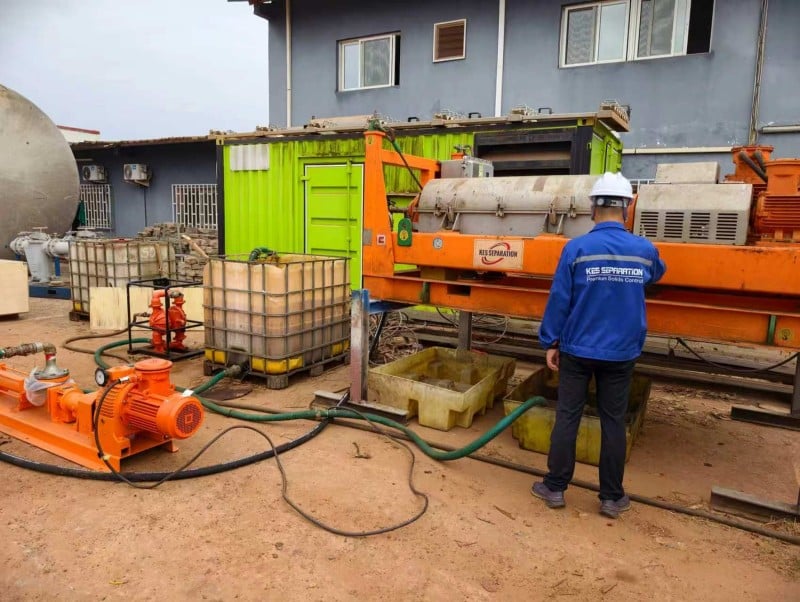
Professional Oilfield Equipment Training in West Africa
Oilfield operations depend on reliable equipment, properly trained operators, and consistent maintenance procedures. Even advanced solids control equipment may not achieve its expected performance when operating parameters are incorrectly adjusted or routine maintenance is overlooked.
During this West Africa training service, KES Separation focused on practical operator knowledge. The training covered equipment working principles, standard operating procedures, parameter adjustment, daily maintenance, troubleshooting, and common equipment faults.
By providing direct on-site guidance, the technical team helped local operators better understand how equipment performance can change according to drilling fluid properties, viscosity, solid content, and operating conditions.
This type of oilfield equipment training in West Africa can help project teams improve equipment utilization and develop stronger in-house technical capabilities.
Decanter Centrifuge Training for Solids Control
A decanter centrifuge is an important separation machine used in drilling solids control and other industrial solid-liquid separation applications. It uses centrifugal force and density differences to separate solid particles from liquid.
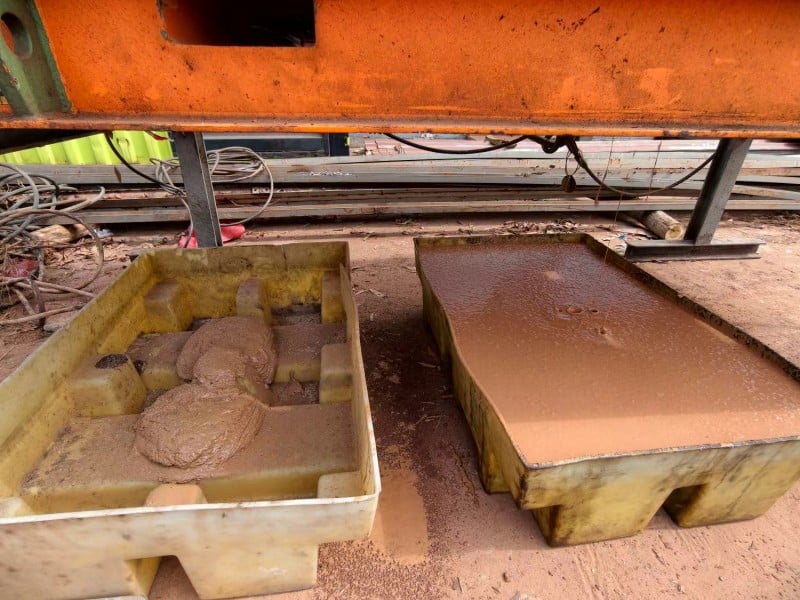
During the training, KES Separation provided practical guidance on decanter centrifuge operation and separation performance.
The team explained how stable operating conditions can influence separation results and why operators need to monitor equipment parameters according to changing field conditions.
A decanter centrifuge can be used for applications including oil and gas drilling, drilling waste treatment, wastewater treatment, sludge treatment, and other industrial separation processes. KES Separation’s decanter centrifuge product range is designed for continuous solid-liquid separation and demanding industrial environments.
For more information, see the 2 Phase Decanter Centrifuge product page.
Why Proper Centrifuge Training Matters
Proper operator training is important because centrifuge performance depends on more than simply starting the machine. Operators need to understand feeding conditions, operating parameters, differential speed, equipment monitoring, and routine maintenance.
Training can help operators:
- Understand centrifuge working principles
- Follow standardized operating procedures
- Adjust parameters according to material conditions
- Identify common operating problems
- Perform routine maintenance correctly
- Improve separation stability
- Reduce avoidable operational problems
For drilling applications, effective solids removal can contribute to better drilling fluid management and more consistent mud performance.
Progressive Cavity Pump Training and Stable Feeding
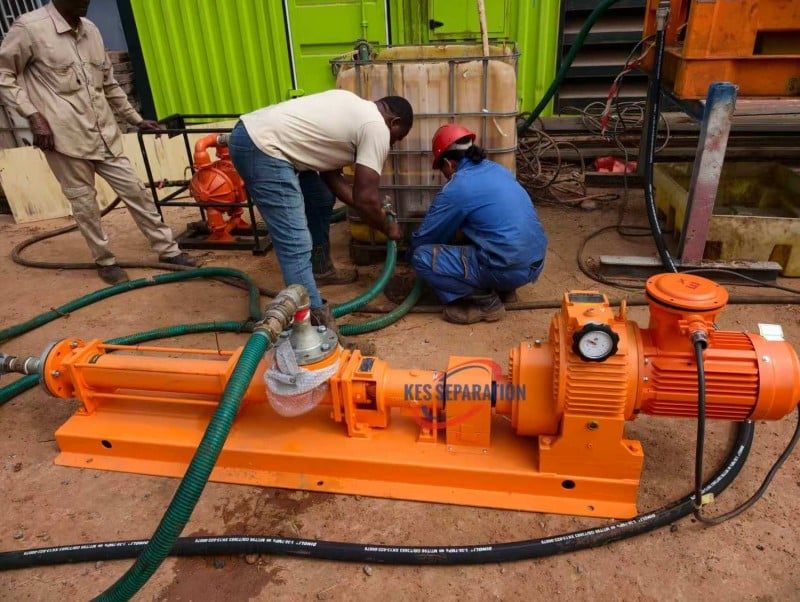
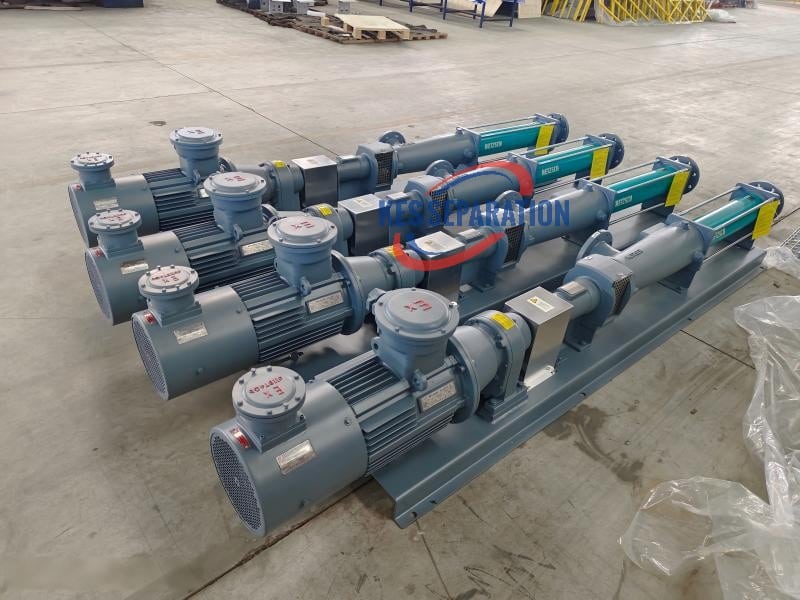
The KES Separation training also covered progressive cavity pumps, also known as screw pumps. These pumps are commonly used as feeding equipment for centrifuge systems because they provide controlled and stable material transfer.
Stable feeding is particularly important for centrifuge operation. Unstable or pulsating feed conditions can disturb the separation process and negatively affect overall performance.
A progressive cavity pump uses a rotor and stator arrangement to provide controlled positive-displacement conveying. This allows material to be transferred steadily toward the centrifuge while helping maintain consistent feed conditions.
During the West Africa training service, KES Separation’s technical team explained the relationship between screw pump feeding and centrifuge separation. Operators were guided on how to select and adjust operating conditions according to actual material characteristics.
Benefits of Stable Centrifuge Feeding
Stable feeding can provide several operational benefits, including:
- More consistent material flow
- Improved centrifuge separation stability
- Better control of operating conditions
- Reduced flow fluctuations
- More predictable equipment performance
- Improved solids-control efficiency
Proper pump operation is therefore an important part of an effective solids control system.
Hands-On Equipment Operation and Maintenance
One of the key elements of the West Africa service was hands-on technical training.
Rather than focusing only on classroom-style instruction, KES Separation combined theoretical explanations with practical equipment operation. Local operators received targeted guidance on standard procedures, equipment inspection, parameter adjustment, daily maintenance, and troubleshooting.
Routine maintenance is particularly important for equipment used in demanding oilfield environments. Regular inspection and correct operating procedures can help identify potential issues before they become larger operational problems.
The training therefore emphasized practical knowledge that operators can apply during daily field operations.
Technical Support for Drilling and Solids Control Operations
Oilfield projects often operate under challenging conditions where equipment performance must remain stable for long operating periods. Technical support can play an important role when operators encounter changing material conditions, equipment issues, or process-performance problems.
KES Separation’s approach combines equipment supply with technical guidance and field support. The company provides separation solutions for applications including oil and gas drilling, drilling waste management, and other industrial separation requirements.
Its decanter centrifuge technology is also applicable to different solid-liquid separation applications beyond drilling. This makes operator knowledge and equipment matching important considerations when developing a separation system.
For broader application information, visit the Oil & Gas Drilling section of the KES Separation website.
Customized Training Based on Real Field Conditions
Every oilfield project can have different operating conditions. Mud properties, solid concentration, viscosity, flow requirements, equipment configuration, and environmental conditions can influence system performance.
For this reason, effective technical training should address actual field requirements rather than relying entirely on generic instructions.
During the West Africa service, KES Separation focused on real operational challenges and equipment matching issues encountered by local project teams. The training was designed to help operators understand how equipment parameters can be adjusted when material conditions change.
This practical approach can help teams become more confident when managing day-to-day equipment operation.
KES Separation’s Global Technical Service
Technical expertise and after-sales support are important parts of successful international equipment projects. Supplying equipment is only one part of a complete solution; operators also need appropriate training, maintenance knowledge, troubleshooting support, and technical guidance.
KES Separation continues to develop its international service capabilities by providing equipment and customized technical services for global customers.
The West Africa training demonstrates this service approach by bringing technical expertise directly to the project site and helping local operators develop practical equipment-operation skills.
Through professional oilfield equipment training, equipment guidance, and technical support, KES Separation aims to help customers maintain stable and efficient operations.
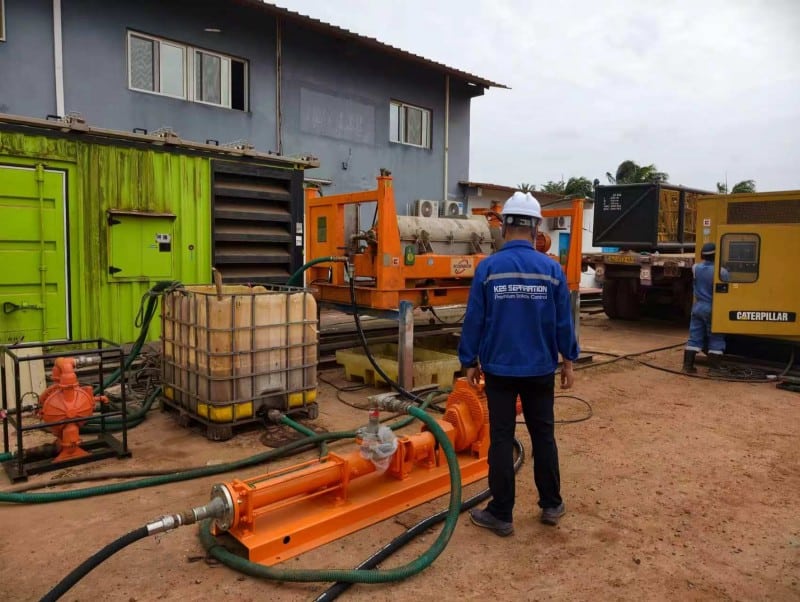
The recent oilfield equipment training in West Africa provided local operators with practical knowledge covering decanter centrifuges, progressive cavity pumps, equipment operation, maintenance, troubleshooting, and parameter adjustment.
By combining technical explanations with hands-on training, KES Separation helped local teams better understand their equipment and the relationship between stable feeding and efficient solid-liquid separation.
For oilfield projects, properly trained operators and reliable technical support can contribute to more consistent equipment performance and efficient solids control operations.
KES Separation will continue providing professional separation equipment, technical training, and customized support to customers across international markets.
FAQ-
1. What is oilfield equipment training?
Ans: Oilfield equipment training teaches operators how to safely and efficiently operate, maintain, monitor, and troubleshoot equipment used in drilling and oilfield operations.
2. Does KES Separation provide technical support?
Ans; Yes. KES Separation provides technical services including equipment operation guidance, maintenance support, troubleshooting, parameter adjustment, and customized technical assistance
3. What are the benefits of on-site equipment training?
Ans: On-site training allows operators to learn using actual equipment and real operating conditions. It can make technical instruction more practical and relevant to daily field operations.