Dedicated to Industry Separation Solutions

Thermal Desorption Unit

The Ultimate Separation Solution

For hazardous wastes heavily contaminated with hydrocarbons—such as oily sludge, tank bottoms, and OBM cuttings—simple mechanical separation is often insufficient. The Thermal Desorption Unit (TDU) provides an environmentally friendly and highly effective solution. By utilizing controlled heat, the TDU separates hydrocarbons from the solid matrix without combustion, recovering up to 99% of the oil while leaving the solids dry and safe for disposal .

A Combustion-Free Process

The TDU operates on a principle of volatilization rather than incineration. The Workflow: Feed material is homogenized and enters a rotary kiln where it is heated to temperatures between 250°C and 600°C. This heat causes the oil and water to evaporate, separating them from the solids. The vapor stream is then processed through condensers to reclaim liquid oil and water, while the remaining solids are cooled and discharged. The recovered oil can be sold or reused, transforming a waste liability into a valuable asset .

The KES Solution

KES Thermal Desorption Units replace conventional incineration, recovering valuable base oil from hazardous waste while virtually eliminating emissions.

Refinery Tank Bottoms:

Recovering valuable crude from difficult-to-treat sludge.

OBM Cuttings

Treating drilling cuttings to remove residual oil for safe environmental discharge.

Soil Remediation

Cleaning up soil contaminated by oil spills or industrial leaks.
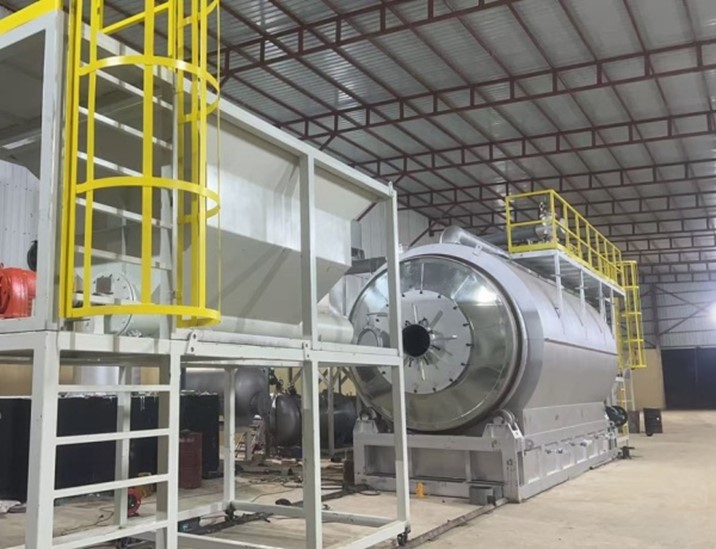
How It Works

  1. Feed Preparation: Sludge is homogenized and fed into the system via screw conveyors or pumps.
  2. Heating & Volatilization: The material is heated (250°C – 600°C) in a rotary kiln to volatilize hydrocarbons and water.
  3. Separation: Heat causes oil and water to evaporate, separating them from solid residues.
  4. Vapor Treatment: The vapor stream passes through condensers to recover liquid oil and water.
  5. Residue Handling: Remaining solids are cooled and discharged; they are often non-hazardous and safe for disposal or construction use.
  6. Emission Control: Exhaust gases are treated with scrubbers or thermal oxidizers to ensure clean air release.

Resource Recovery

Turn waste into revenue by recovering reusable oil that would otherwise be lost.

Environmental Compliance

Operate with confidence knowing the non-combustion process minimizes emissions and produces treated solids that meet strict environmental standards for non-hazardous disposal 


Contact Us

Recover Value from Waste Stop paying for disposal and start recovering oil. Contact KES Separation to learn how our TDU technology can improve your bottom line and environmental footprint.

Get An Instant Quotation Now