Paper manufacturing uses enormous quantities of water. Processing primary fibers, such as wood or pulp, into new paper and recycling used paper both require large amounts of water.
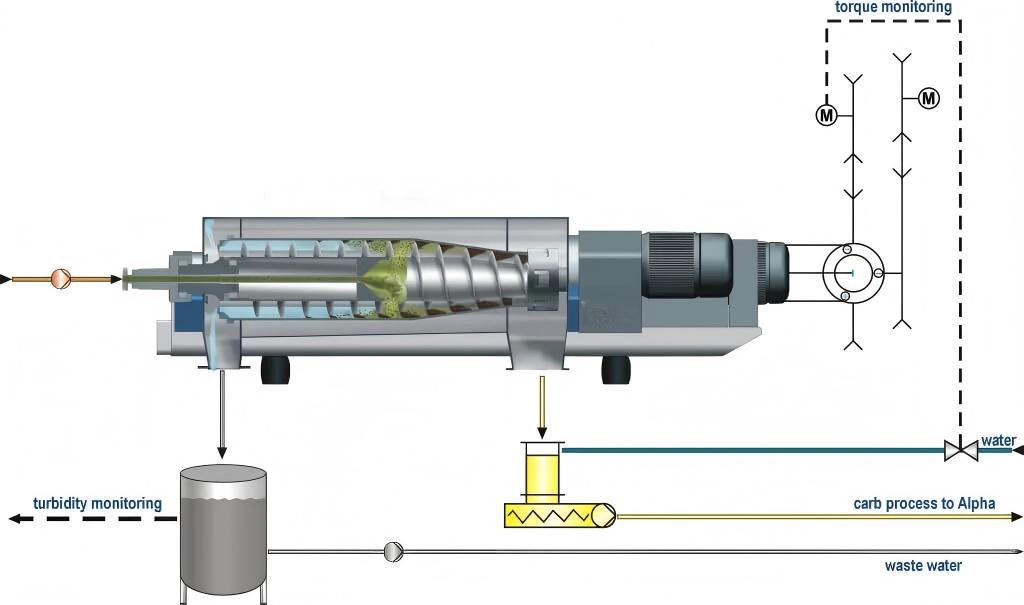
With both processses, the pulp must be put into a suspension with water in order for the paper to obtain an even structure. Consequently, enormous volumes of wastewater are produced. As a result, a decanter is essential for recovering and processing wastewater. The centrifuge:
Generally speaking, less water is needed when recycling paper than when manufacturing new paper. Nevertheless, a considerable amount of waste water is produced during the process.
The main problem when recycling paper is removing the printing ink from the waste paper (de-inking). De-inking introduces special residues into the wastewater, which the decanter removes during its process. As a result, decanter centrifuges play a key role in recycling waste paper.
Of all production processes, manufacturing paper is one of the most water-use intensive. Depending on the paper quality desired, it is necessary to add additional chemical substances, such as whitening agents, dyes and pigments to the water. In order to reuse these chemicals and pigments, manufacturers extract them from the process wastewater. This saves the paper industry significant costs. The decanter centrifuge is a cost-effective tool for pigment recycling.
To reduce environmental pollution, many pulp mills have biological sewage treatment plants. Flottweg centrifuges handle the task of dewatering the sludge waste produced by biological sewage treatment.
The advantages of dewatering primary and surplus sludge are that the reduced sludge volume is less costly to transport, and the increased energy yield from the downstream energetic recycling.
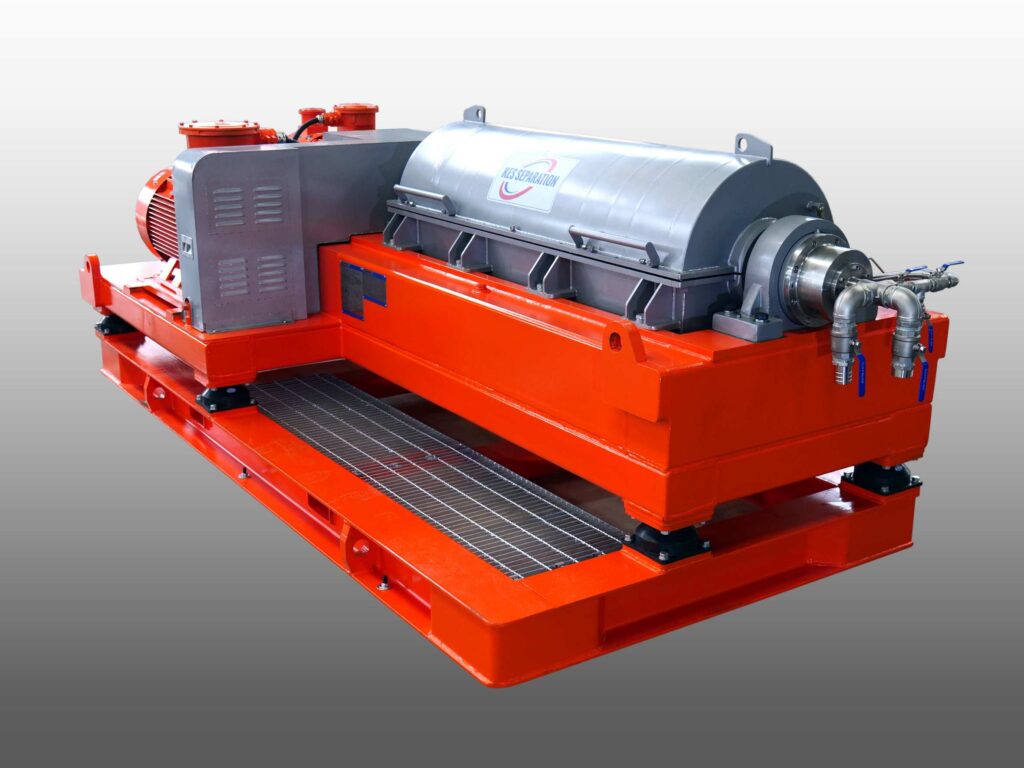
Decanters from KESS help the paper industry to reach their goals:
Ready to enhance your beverage production efficiency and product quality? Contact KES Separation today to discuss a customized centrifuge solution for your beverage application.