Polyvinyl chloride (PVC) is a thermoplastic polymer processed between 320 and 392 degrees Farenheit (160 C and 200 C).
About 34 million metric tons of PVC are manufactured annually worldwide. Important PVC applications include the building industry, the electrical industry and the automotive industry.
PVC is produced by the polymerization of vinyl chloride monomer (VCM). There are three manufacturing processes:
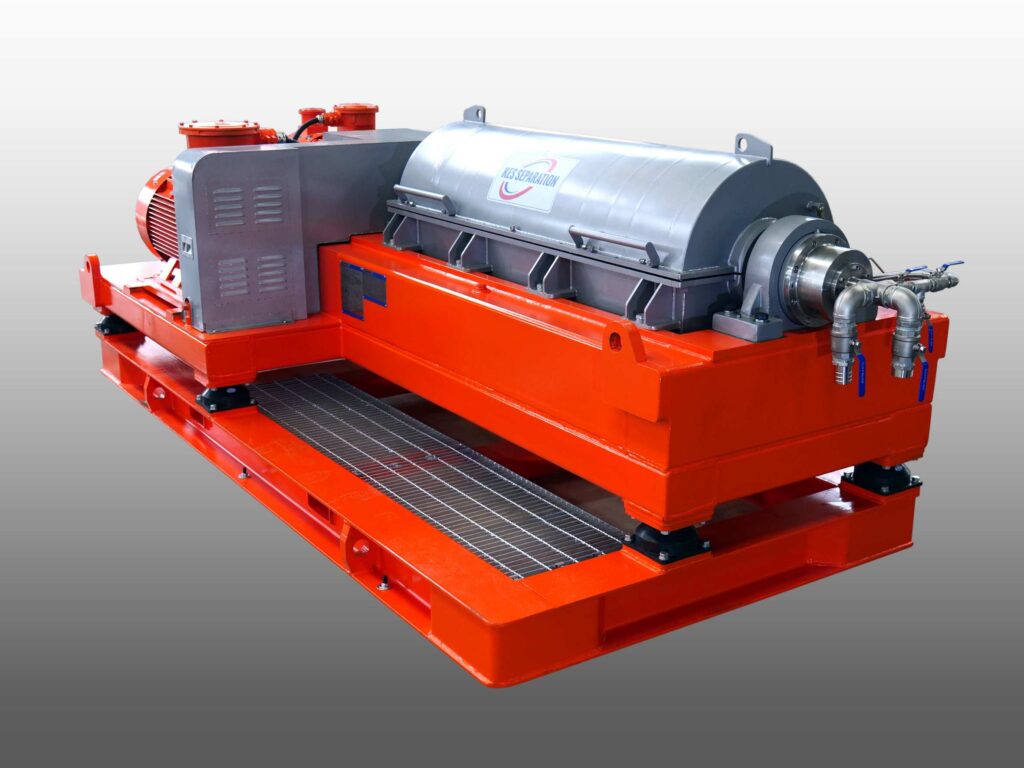
The manufacture of PVC largely uses the suspension process. Decanter centrifuges are required to dewater the PVC suspension after polymerization. PVC dewatered using KESS decanter centrifuges has a lower residual moisture level, which reduces the cost of the subsequent thermal drying process.
The high operating forces inside the centrifuge can lead to wear on key components. KESS decanter centrifuges are designed with enhanced wear protection to reduce abrasion and extend service life. Wear-prone parts are designed for easy replacement and refurbishment, helping to maintain reliable and long-term operation.
Product-wetted parts in KESS decanter centrifuges are manufactured from high-quality, acid- and corrosion-resistant stainless steel. This ensures long service life, consistent product quality throughout the process, and improved overall machine stability.
KESS decanter centrifuges automatically adapt to varying load conditions. The drive system regulates the differential speed based on scroll torque, allowing efficient dewatering and achieving high total dry solids content in the discharged solids.
Ready to enhance your beverage production efficiency and product quality? Contact KES Separation today to discuss a customized centrifuge solution for your beverage application.